File Recovery
Lumi’s recovery system is designed to protect painting work from crashes, mistakes, and interrupted sessions. It gives projects a safety net without forcing artists to constantly duplicate files by hand.
Recovery is built around two ideas: automatic background protection and intentional checkpoints. Together they help preserve recent work while still allowing an artist to return to earlier moments in a project.
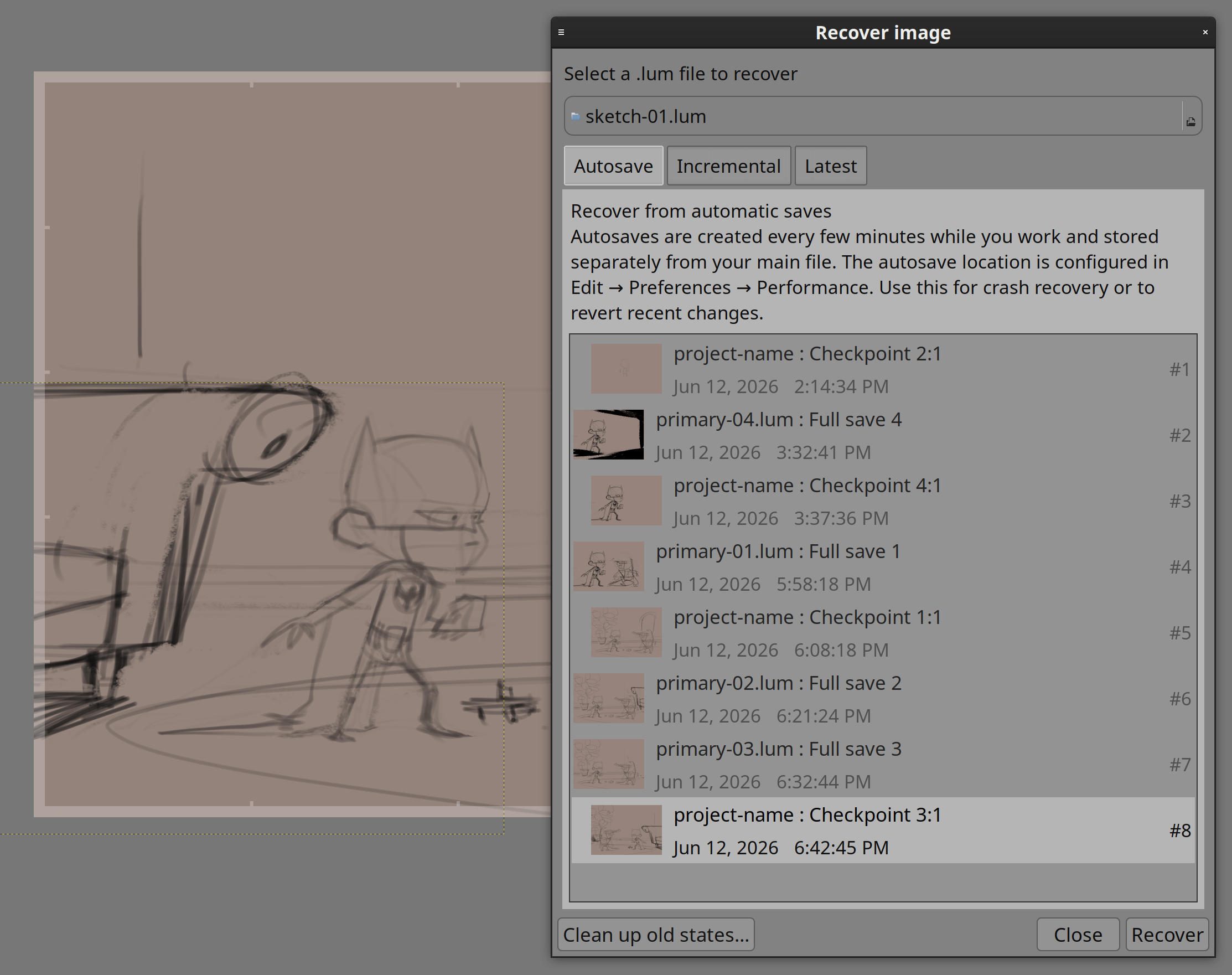
Automatic protection
While an image is being edited, Lumi can keep recovery data separate from the main working file. This means the project itself does not need to be rewritten every time a safety snapshot is made.
If something goes wrong, the automatic recovery state can provide a recent version of the artwork that may be newer than the last deliberate save. The goal is simple: reduce the amount of work lost when a session ends unexpectedly.
Intentional checkpoints
Some moments in a painting are worth preserving deliberately: before a major colour change, after a successful sketch, before flattening decisions, or when trying a risky direction.
Lumi supports project-level checkpoints for these moments. They are lighter than keeping a separate full copy for every experiment, but still give the artist a way to step back to meaningful points in the work’s history.
Recovering with context
Recovery states are presented as versions of the artwork rather than as raw files to hunt through manually. This lets an artist compare recent automatic saves and deliberate checkpoints, then open the state that best matches the work they want to continue from.
Recovered images open as working documents, allowing the artist to inspect them before deciding how to save or continue.
Keeping recovery practical
A useful recovery system must also stay manageable. Lumi is designed to keep recovery data organised and make old states removable when they are no longer needed.
This keeps safety from becoming clutter. Recovery can remain active in the background, while artists still have a way to control how much history is retained over time.
Confidence while working
The purpose of file recovery is not to replace saving, but to make creative work less fragile. Artists can paint, experiment, and take risks knowing that Lumi is maintaining additional ways back when a session, file, or decision goes wrong.